The off-ball movement journey · ages 12–16+
Never get the ball? You're standing where defenders want you
Off-ball movement changes whether the passer can find you and whether your movement creates useful space for someone else.
On this page
- Why you're not found: the marker's shadow and how to leave it.
- Losing your marker — the check-away and the double move.
- Timing runs: early is offside's cousin, late is invisible.
- Showing and hiding — moving to be found, moving to create space for others.
Stay to the end: the ten-minute movement audit that changes your next game.
1The shadow
Why does the ball never come to you?
Because standing still makes you easy to mark — your marker only has to cover one spot, and the passer sees a covered player. Being 'free' isn't about pace; it's about making your marker choose between two spots. Movement creates the choice; the choice creates the pass.
Making him choose has a mechanic — the double move. ↓
2Losing the marker
How do you actually get free?
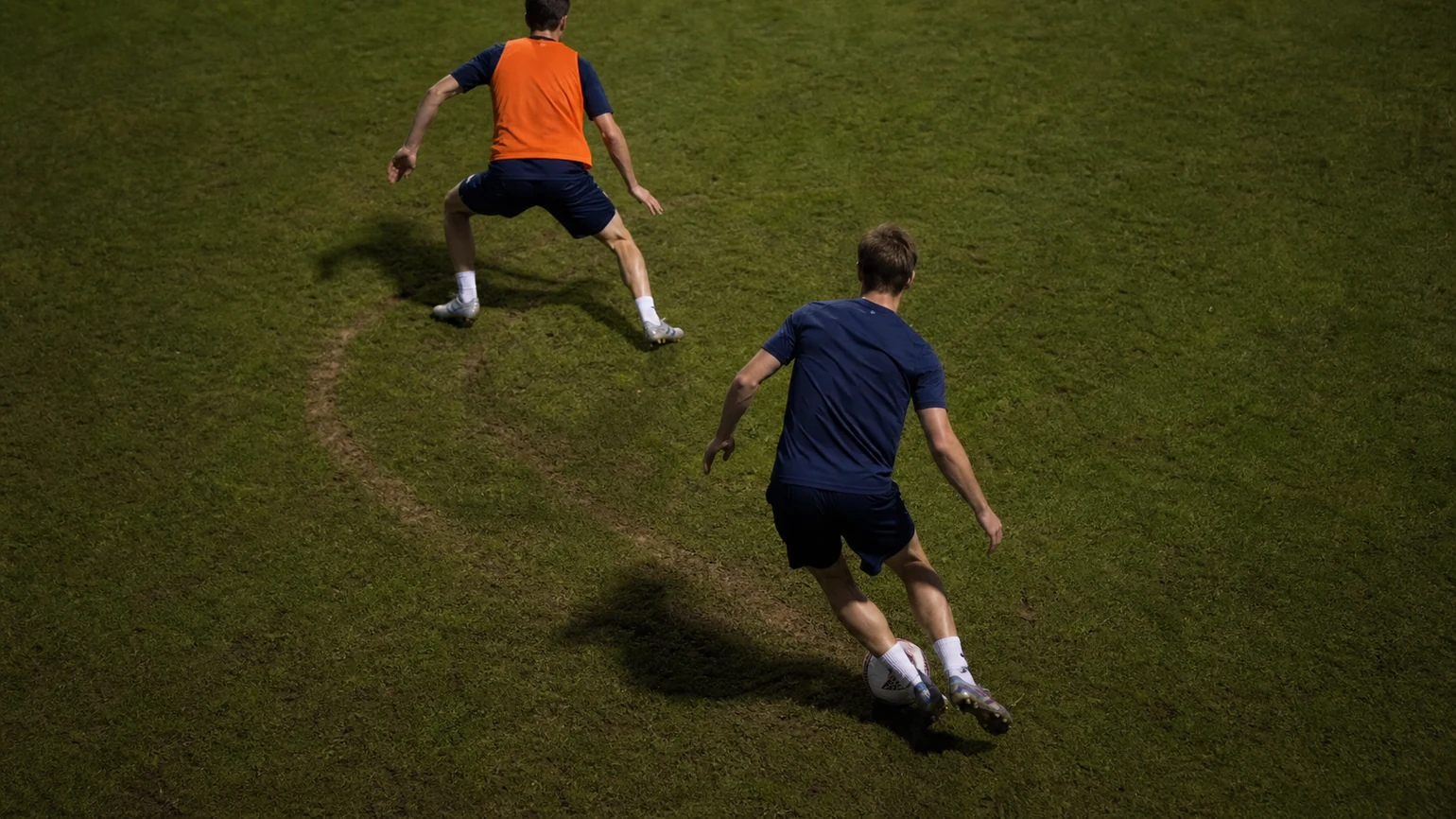
Check away, then come. Two sharp steps away from where you want the ball drag the marker with you; the return to the real spot is where the pass arrives. One move gets tracked; the second move is the free one. Add a look at the passer on the return — that eye contact is the pass's trigger.
SUGGESTION — clip: check-away and return to receive, marker left behind, arrow overlay on both movements.
Getting free is half. The other half is WHEN. ↓
3Timing
Why do your runs never get rewarded?
Because early runs die offside-adjacent and late runs are invisible. The run starts when the passer CAN pass — head up, ball out of his feet — not when you feel like running. Watch the passer, not the space: the space is always there; the passing window isn't.
Show and hide: sometimes your movement is not for you. Moving a marker can open a lane for a teammate. Review whether the movement changed the picture, even when you did not receive.
Now measure it — movement is countable too. ↓
4Try it this week
What's the movement audit?
- Ten-minute audit: count double moves, runs started when the passer could play, and movements that opened space for a teammate.
- Training reps (8 min): a partner holds the ball while you check away, return on the passer's trigger, communicate, receive, and reset. Use a manageable number with quality.
- One-game cue: after a stoppage, check the marker, passer, and useful space before choosing whether to hold, check away, or move into a new lane.
- Self-check: did the movement help the passer or teammate, or was it movement without a picture?
Getting found starts with the marker, the passer, and the useful space. Move on the passing picture, and count the runs that helped even when the ball went elsewhere.
The road continues
Next phase — Role and Transition Decisions
Movement can change the picture. Next: ranking the action that fits your role when possession and pressure change.
Continue