SPECIALIST TRANSFORMATION · BALL MASTERY · AGES 10-16+
Does one loose touch pull your whole body apart?
Use small adjustment steps, stable hips, and a relaxed upper body to reconnect with the ball before the next action.
On this phase
- Stay ahead of the ball instead of reaching from behind it.
- Reconnect the feet after a soft, wide, or fast touch.
- Change feet without exposing the ball.
- Run a 15-rep body-control test at three speeds.
At the end: a slow-medium-fast test that shows where your body control breaks down.
1Reconnect the feet
Why do my feet feel late after the touch?
The first touch and the next step belong together. When the ball moves, the feet have to move with it. Small steps keep the body close enough to cut, pass, protect, or push again without reaching.
Use this cue: touch, reconnect, act. Do not admire the touch. Move the feet back underneath the next decision.
Fast feet only help when the rest of the body stays organised ↓
2Control the body
What should my hips and upper body be doing?
Stay low, forward, and relaxed enough to react. The hips guide the direction, the middle of the body keeps you stable, and the upper body helps you sell or protect the movement. Full-body tension makes the next adjustment slower.
- Keep the feet close enough to move again.
- Let the knees and hips absorb the change of speed.
- Keep the chest quiet enough to see the next action.
- Use the shoulder and body line to protect without losing balance.
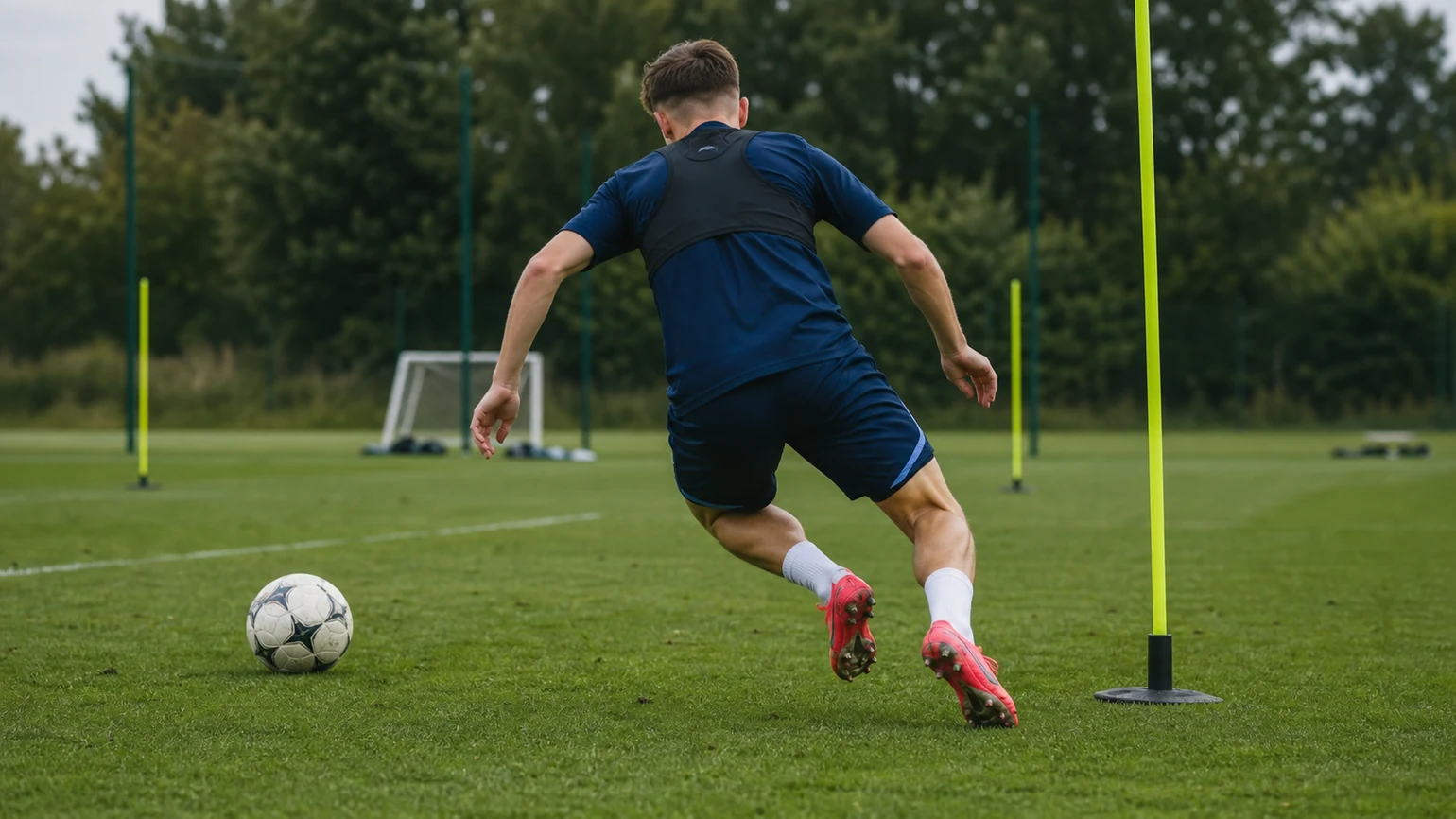
SUGGESTION – anonymised close side angle of a soft touch followed by two short adjustment steps and the next push; slow the clip between contact and the second step.
Body control matters most when the ball is not exactly where you wanted it ↓
3Recover the action
What do I do when the touch runs wide?
Correct early instead of stretching late. Shorten the next step, get the body back beside the ball, and use the closest safe touch. When changing feet, move around the ball without leaving it exposed between you and the pressure.
If you are reaching, the feet are already late. Bring the body to the ball before asking the ball to do something harder.
The newest sessions showed the same pattern at different speeds: a soft correction plus quick feet restored control better than one bigger rescue movement.
The final test is whether those details survive more speed ↓
4Try it today
Where does my control break down?
- Mark a five-metre lane with one change-of-direction gate.
- Complete five reps slowly, five at medium speed, and five fast. Each rep is touch, adjustment steps, turn, then a controlled exit.
- Score one point when the feet reconnect before the turn, the body stays balanced, and the exit touch remains within one stride.
- For the final three reps, change feet while keeping your body between the ball and an imaginary defender.
Self-check: Record the score for each speed out of five. Which detail disappeared first as speed rose: close feet, low hips, relaxed body, or protected foot switch? Train that detail, not just more speed.
Body control is the link between one touch and the next action. Stay connected, make the small correction early, and speed becomes useful instead of rushed.
The road continues
Next: The Home Training System
Put touch, adjustment, and next-action scoring into a repeatable weekly practice rhythm.
Continue