Shutting down a 1vs1 · phase 1 of 5
Call the speed before you close the space
High, medium, and low pace ask for different gaps and foot angles before a tackle is considered.
On this page
- Call high, medium, or low before the attacker reaches you.
- When to close quickly and when to protect the sprint lane.
- How braking keeps the next step available.
- Today's rep block: nine speed-call closes.
At the end: the nine-rep speed-call drill for a more controlled arrival.
1The window
When can you close at speed?
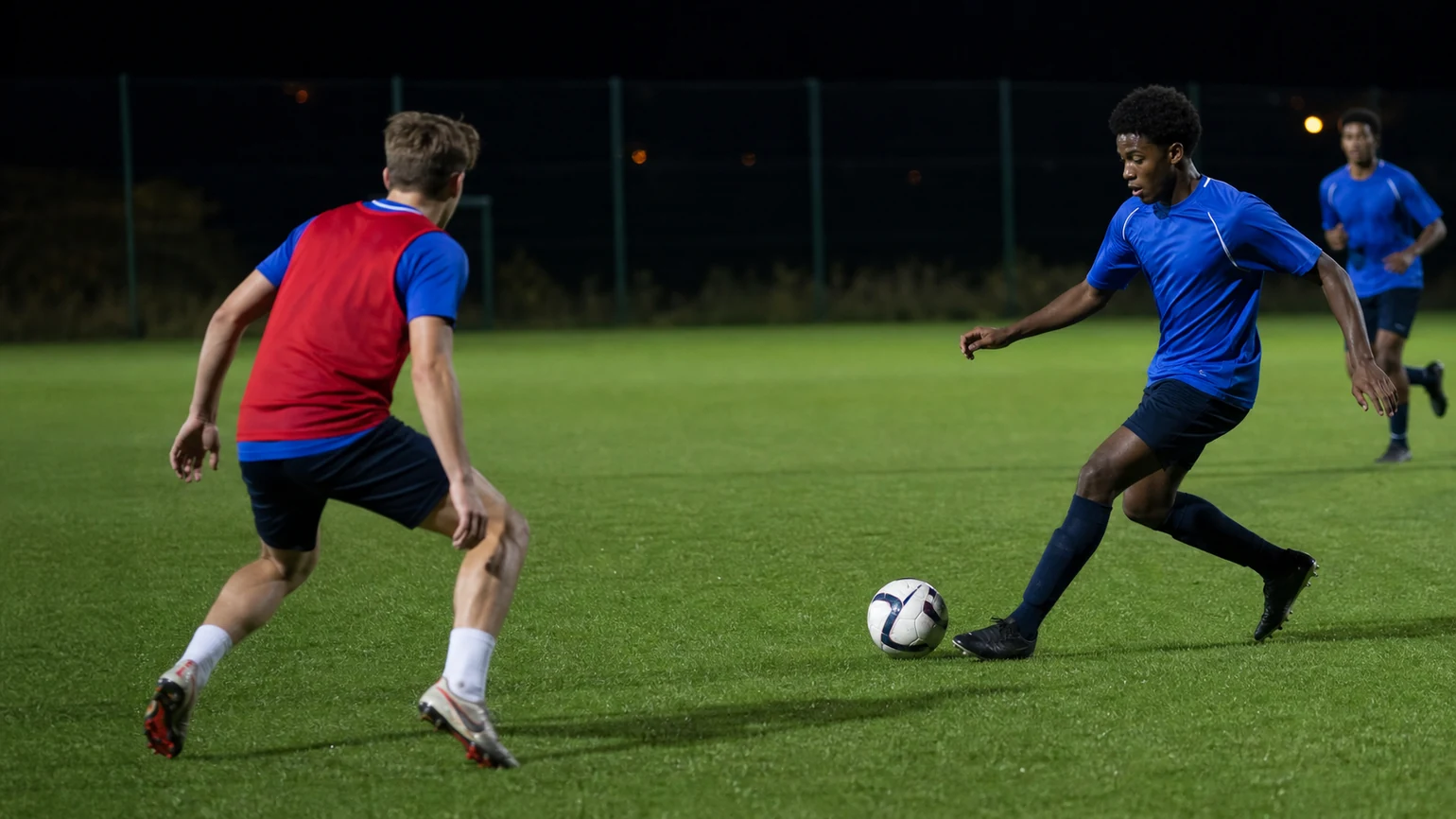
Use the ball's travel to reduce space, then read the attacker's arrival pace. If the attacker can push into open space, protect the sprint lane. If the pace is lower, close more of the gap while staying able to move either way.
Call it before you close: high, medium, or low. The call chooses the gap and the direction your feet need to face.
SUGGESTION — real clip: close-down starting on the pass, small braking steps before arrival, freeze on the slowing moment.
The brake matters more than the sprint — here's what it looks like in the feet. ↓
2The brake
How do you actually stop a full sprint in two metres?
Small, quick steps into the ground, with the body ready for the likely sprint. One large final step can carry the weight past the feet and make the first change of direction late.
Arrival check: could you push off in either direction the instant you stop? If not, you arrived out of control — the attacker knows it before you do.
Arrived low and balanced. Now your body starts talking — the next step makes sure it says nothing. ↓
3Try it today
What's the sprint-brake drill?
- Speed-call closes: partner serves nine reps—three high pace, three medium, three low. Call the speed before moving.
- Choose the gap: give high pace more sprint protection; close more against medium and low pace without losing balance.
- Either-way test: partner points left or right as you arrive; push that way without crossing the feet.
- Self-check: did your gap match the speed, or did you defend all nine with one setup?