Shutting down a 1vs1 · phase 2 of 5
Your stance has to match the speed
Stay low and balanced, then change the gap and foot angle for the pace and space in front of you.
On this page
- Why square chest and flat feet reduce your options.
- High pace: feet and weight ready for the sprint lane.
- Medium and low pace: closer pressure without over-committing.
- Today's rep block: three-speed stance holds.
At the end: the mirror game that makes the stance automatic.
1The three tells
What is your body telling the attacker right now?
Attackers read the defender's body. A square chest leaves two open sides; flat feet delay the first push; hips turned too far expose the opposite lane. The stance should guide without giving away the route you cannot recover.
Here's the position that says nothing — piece by piece. ↓
2The stance
How does the stance change across three speeds?
High pace: give enough gap to turn and sprint, with both feet closer to the running direction. Medium pace: one foot can face the attacker more while the other protects the push. Low pace: close further, stay low, and apply pressure without planting the feet.
The distance rule moves: speed decides how much gap you need; surrounding space decides the angle. Close enough to influence the attacker, far enough to respond to the next touch.
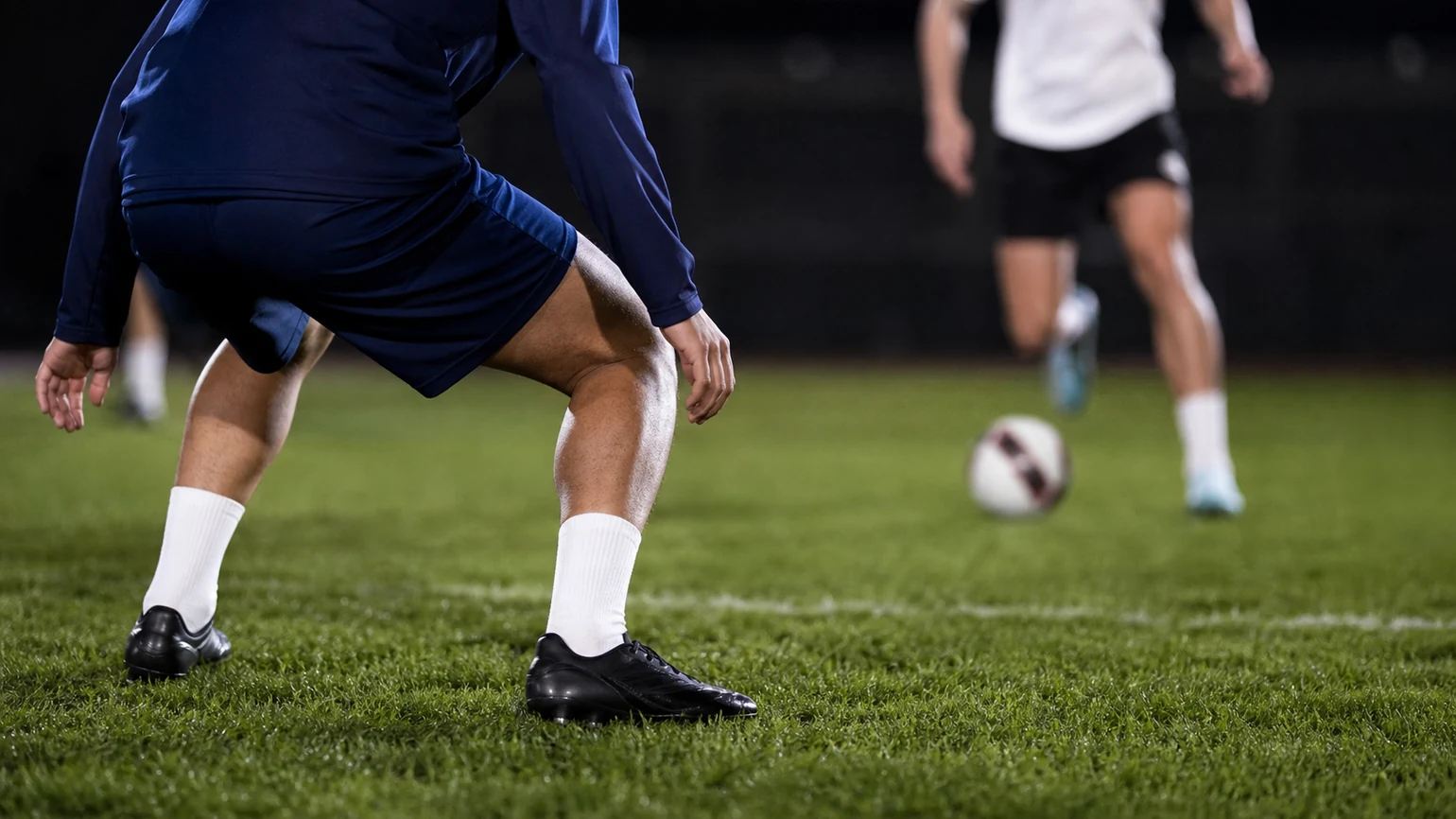
SUGGESTION — anonymised three-rep freeze-frames with overlays: side-on hips, bent knees, balls of feet, and the changing gap for high, medium, and low pace.
Stance set. Now comes the hardest instruction in defending: do nothing, brilliantly. ↓
3Try it today
What's the mirror game?
- Three-speed holds: partner approaches high, medium, or low pace; call it, set the matching gap, and mirror without tackling.
- Tell hunting: partner calls square chest, flat feet, or crossed legs when it appears. Three calls reset the round.
- Space change: repeat once in a narrow lane and once with open space; notice how the same speed needs a different angle.
- Self-check: could you sprint in the direction you were showing?