The self-development journey · ages 12–16+
"Just get better" is not a plan
The self-evaluation test, the one gap that matters, and the week built around it — training like a pro means aiming like one.
On this page
- Name the names: the self-evaluation test from real sessions.
- Finding YOUR gap — three sources, one impact filter.
- The weekly structure: home sessions, one private rule, one match sentence.
- The Sunday review that turns a notebook into trust.
Stay to the end: page one of your plan, built tonight.
1Name the names
How honest is your self-ranking?
Rank yourself in your team — then name the actual names above you. Can't name them? You're not being honest about where you are. Can name them? Then the real question does the work: what exactly do those players do better? 'They're better' is a feeling, and feelings don't train. 'He scans more and plays forward earlier' — THAT trains.
Filter out what you can't control: 'he's more physical, he scores more' — physicality is a maturity timeline and goals are a position. Neither is a standard you can train this week. Extract only what's trainable.
Cross it with two more sources and the gap appears. ↓
2Your gap
Which ONE thing has the highest impact?
Three sources, triangulated: your coach's exact words (patterns in them are gold) · the name-the-names answers · your own match moments — where does the game get too fast for you? Where they overlap, that's your gap. Then the filter from real sessions: of everything you could improve, which one would have the highest impact on your game? Pick ONE. Write it as an action: not 'get better on the ball' — 'keep the ball under pressure facing my own goal.'
Now wrap the week around it — every layer. ↓
3The week
What does a planned week look like?
Three to four home sessions with the gap as the weakness block. One private rule per team training — a constraint that forces the gap in live play, like two-touch rondos nobody asked you to play. One match-focus sentence carried into the game. Light after match day, sharp before it. Nothing else changes — the gap just shows up in every layer.
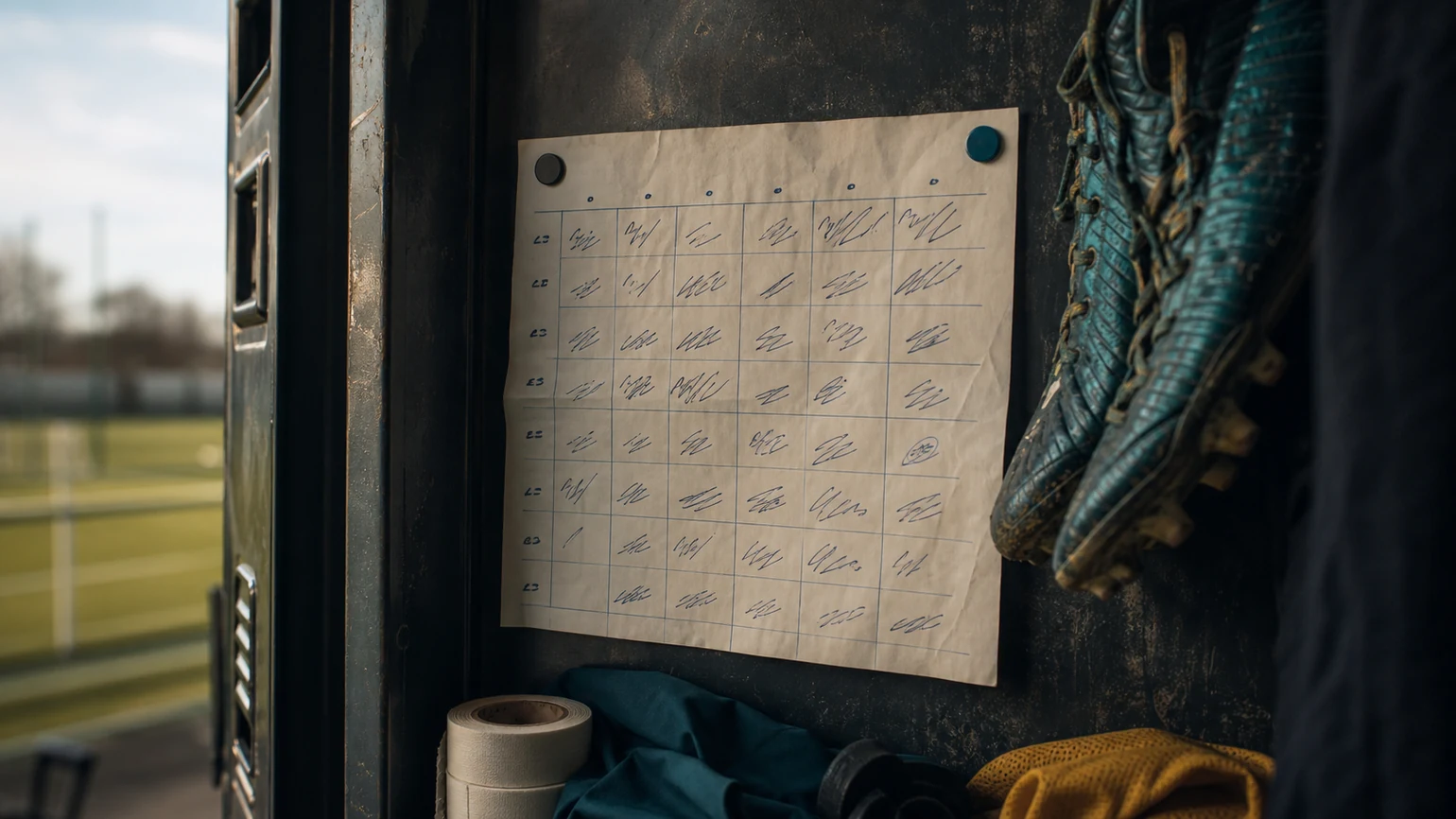
SUGGESTION — close-up of a player's plan page: the gap, the week grid, streak counts, a Sunday review box.
The review is where trust gets built — weekly, on paper. ↓
4Try it tonight
What's page one?
- Build it: name the names → extract what they actually do better → cross with coach words + match moments → ONE gap, highest impact → the week around it. One page.
- Every Sunday, five minutes: did the sessions happen? Is the number moving? Did the gap show up differently in the game? Hold each gap 3–4 weeks.
- Know what you're really building: not confidence — TRUST in your abilities. Trust is evidence, not mood — and the notebook is the evidence you point your doubt at before big games.
The plan in one sentence: one honest gap, one built week, one Sunday review — repeated until trust is a fact you can prove to yourself on demand. Random training separates players. Aimed training separates careers.
The road continues
Next phase — Coach Conversations
Your training has a plan. Next: the conversations that move you forward without a label.
Continue