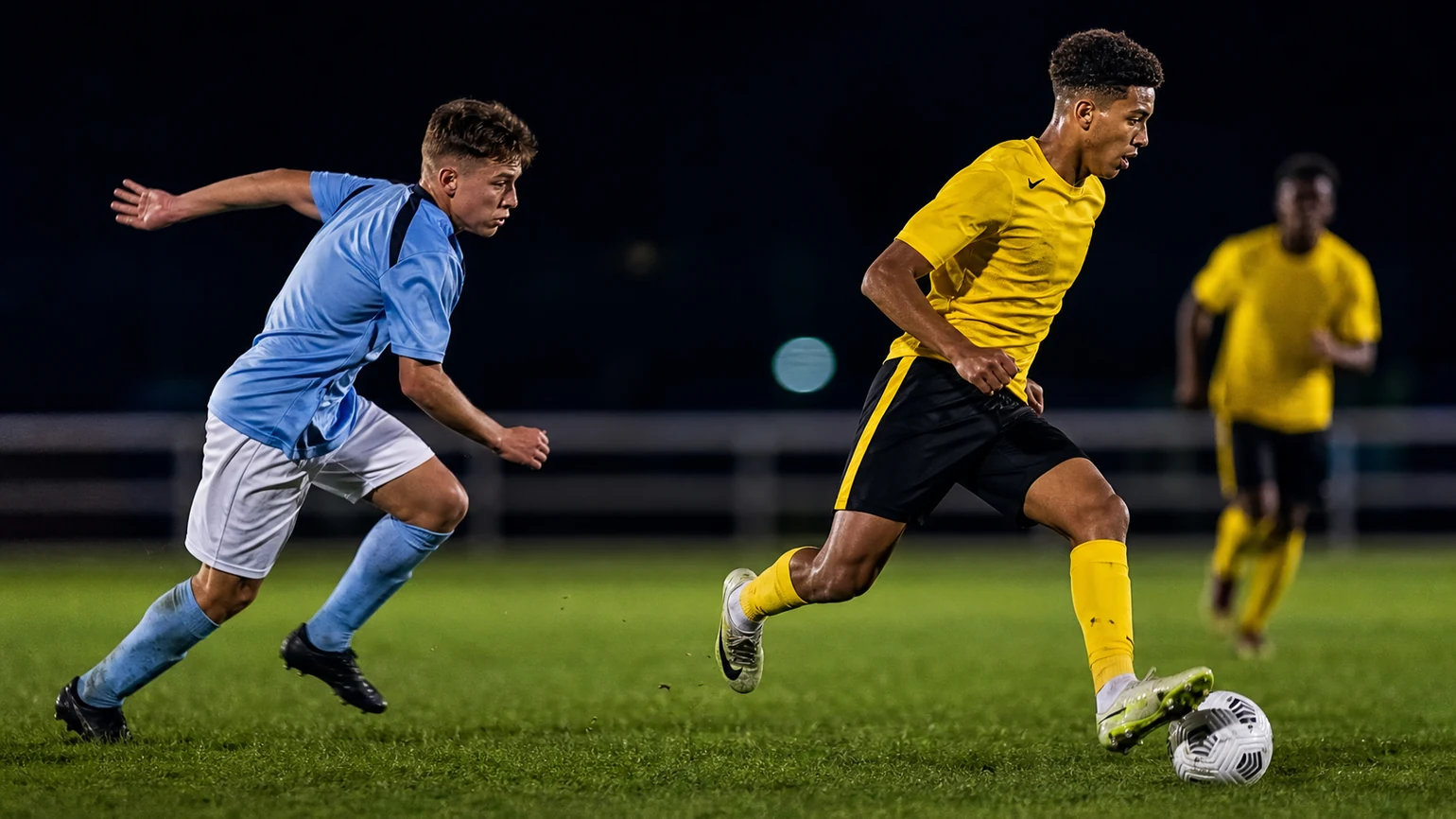
Shutting down a 1vs1 · phase 5 of 5
The duel restarts when the tackle misses
The first attempt can fail without ending the situation. Recover the dangerous line, slow the next action, and defend again.
On this page
- Turn, recover the dangerous line, and go again.
- Why blocking the middle can matter more than charging at the ball.
- How tired legs change stance, patience, and recovery feet.
- The full-duel session tying all five phases together.
At the end: the full defending session — approach to second effort, real duels.
1The second act
What separates the beaten defender from the one who wins anyway?
Still being available for the next action. If the first attempt misses, turn immediately, recover toward the dangerous line, and make the attacker solve the situation again. Reaching the ball first is less important than protecting what the attacker can do next.
SUGGESTION — clip: missed tackle, instant turn, goal-side recovery, duel won on the second contact.
There's one thing that decides whether your second efforts exist at all — and it isn't technique. ↓
2Minute 80
Why do good defenders get beaten late?
As fatigue rises, the stance becomes taller, the feet cross more easily, and the second effort becomes slower. The self-check is whether the late rep still uses the same gap, angle, and recovery line as the early rep.
Now put the whole duel together — one session, all five phases. ↓
3The full duel
How do the five phases become one habit?
- Sprint-brake closes (5 min): phase 1 speed-call gates.
- Stance holds + tell hunting (6 min): phase 2 mirror game.
- Containment rounds (8 min): phases 3–4 — delay to 15 seconds, tackle only on called triggers.
- Second-effort duels (8 min): live 1v1; every miss is followed to the line. Score delay seconds and second-effort outcomes, not tackle count.
- Review (2 min): three numbers — delay seconds, no-trigger tackles, second efforts. That's your defending scoreboard.