The game-day journey · ages 12–16+
Can you give your attention one clear job from the first minute?
A useful game-day routine is not about forcing intensity. It helps you arrive, notice the picture, execute the next action, and reset when the game changes.
On this page
- Build a short routine the player can own and repeat.
- Give the warm-up two football jobs, not an emotional target.
- Choose one first-minutes action inside your control.
- Use an attend-execute-review reset after mistakes.
Stay to the end: a three-game routine scored by actions, not by how fired up you felt.
1Own the routine
What should stay the same before each game?
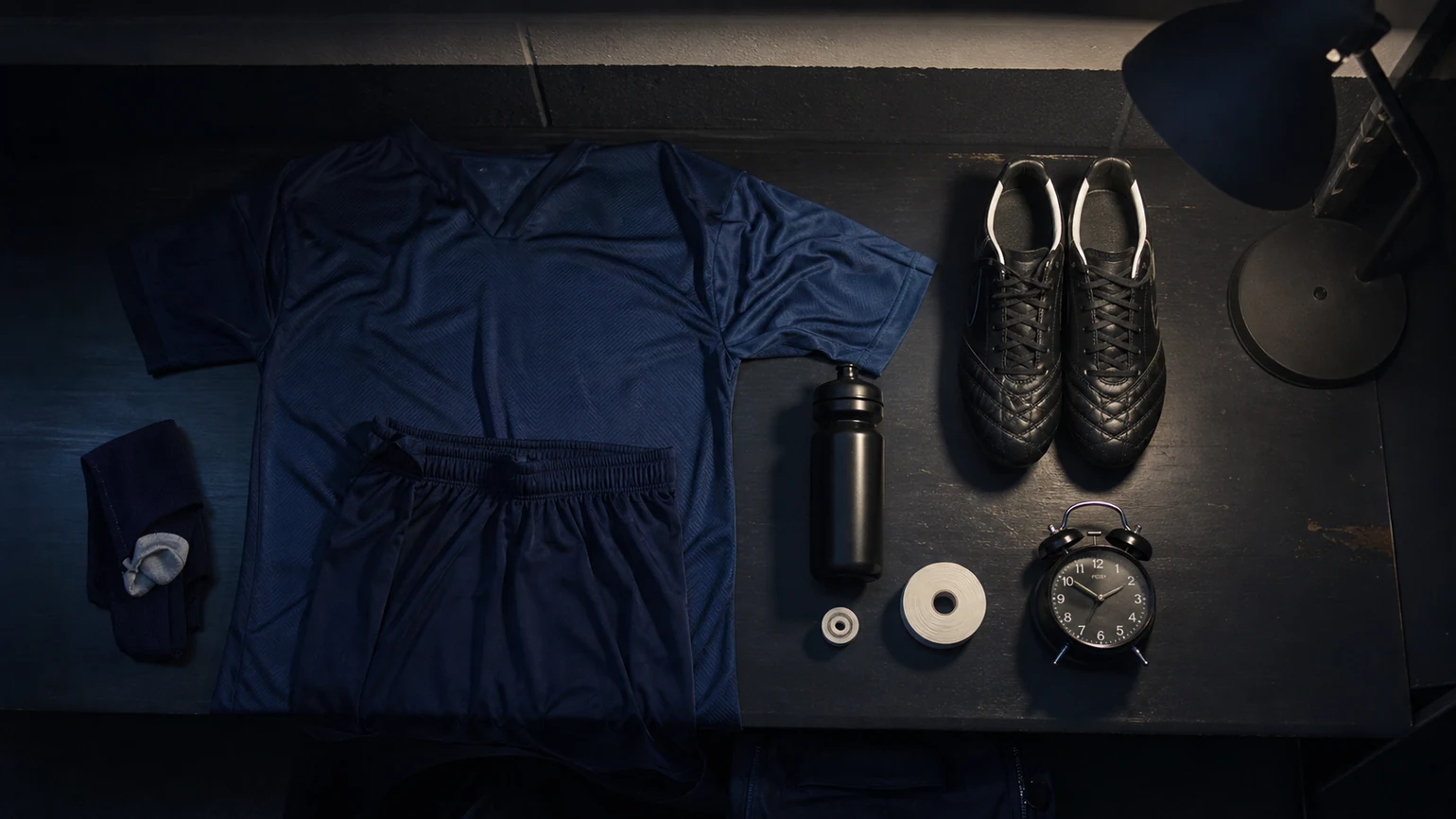
Keep the routine short enough to repeat. Pack what you need, confirm the arrival plan, and write one job for the opening minutes. Food, hydration, sleep, pain, or load questions belong with the parent and an appropriate qualified professional, not a copied internet rule.
Player-owned checklist: kit ready · arrival confirmed · opening job written · one reset phrase chosen. The player checks it; the parent supports the practical parts without running the performance.
The checklist removes noise; the warm-up still has to prepare football actions. ↓
2Attend and execute
What is the warm-up actually for?
Attend to the ball, the space, and the next action. Use the warm-up to find touch weight and body shape, then execute one simple football job at a time. You do not need to manufacture a mood. You need enough attention to perform the action in front of you.
SUGGESTION — anonymised warm-up sequence showing a scan before receiving, controlled first touch, and one clear pass; no outcome captions.
The opening minutes need the same clarity, with a job the player can control. ↓
3The next action
What can you own when the match starts?
Choose one repeatable opening action for your role. It might be scan before the first receive, show into a clear passing lane, communicate one piece of useful information, or recover quickly after possession changes. Do not chase a touch the game does not offer.
After a mistake: look up · name the next job · move. Review the mistake later. During play, score only whether you returned to the next action.
Halftime is a fresh decision point, not a verdict on the first half. ↓
4Try it this week
Can the routine produce repeatable actions?
- Write a five-line card: practical check · warm-up job · opening action · reset phrase · halftime action.
- Run it for three games: count the opening action in the first five minutes and count how many mistakes were followed by an immediate useful response.
- At halftime: keep one useful behaviour and choose one next action. Avoid a full emotional review.
- Self-check: did the routine help you attend, execute, and reset? Change one line only before the next game.
Locked in is not a feeling you force. It is a short routine, clear attention, one useful action, and the ability to return to the next job when the game becomes messy.
The road continues
Next phase — The Comeback Mind
Game day has a system. Next on the Mindset road: coming back from the bad runs.
Continue