The decision-speed journey · ages 12–16+
Coach yells 'quicker!' — but your feet were never the problem
Slow players on the ball are usually just late deciders. Decision speed is trainable, and it starts before you receive.
On this page
- Why decisions lag: deciding during the touch instead of before it.
- Decide-before-receive: the one habit that changes everything.
- The option ladder — knowing your best three choices by position.
- Killing the second-guess without playing scared.
Stay to the end: the call-it-early game from real sessions.
1The lag
Why does the game feel too fast?
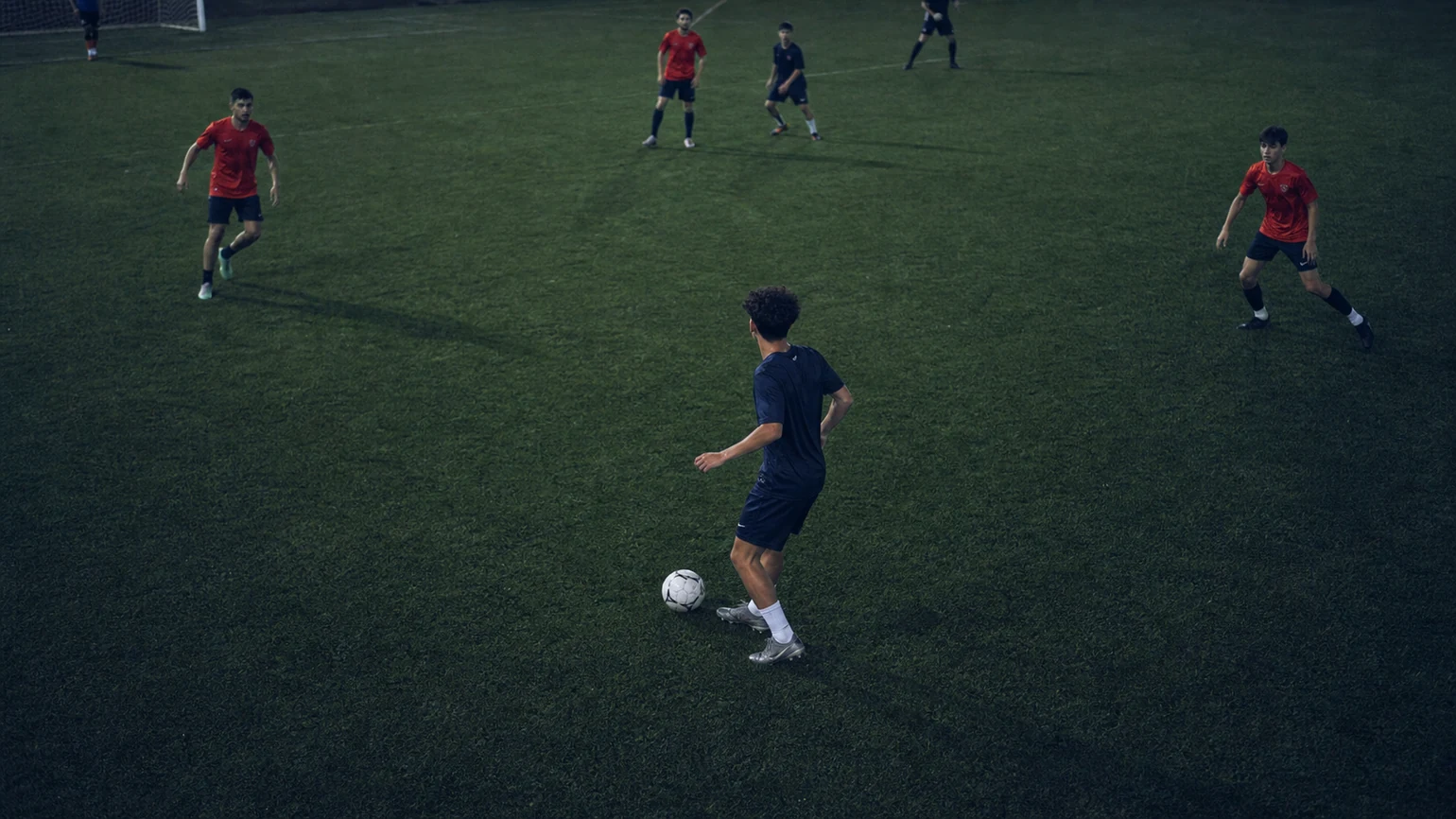
Because you're doing the thinking in the worst possible moment — while the ball is at your feet and the defender is arriving. The game isn't too fast; the decision is too late. Move the decision earlier and the same game slows down.
Earlier means BEFORE the ball — here's what that looks like. ↓
2Decide before receive
What do you decide before the ball arrives?
Prepare a first option, a backup, and a safety action. Scan, rank the available pass or turn, and know what protects the ball if the first option closes. Early does not mean forced: update the choice when the picture changes.
Three options sounds like a lot mid-game. The ladder makes it automatic. ↓
3The option ladder
What are your best three choices, always?
Use a simple starting ladder: is a useful forward action available? → can I connect with support? → what protects possession or removes danger? The order changes with role, field position, score, and the coach's instructions. The value is preparing the ranking before receiving.
SUGGESTION — midfield receive clip, overlay the three questions in order with tick/cross as each option opens or closes.
Now train the clock — out loud. ↓
4Try it today
What's the call-it-early game?
- Call rounds (10 min): a partner serves while you call the first option before the ball arrives. If the picture changes, call change and use the backup instead of forcing the original choice.
- Ladder audit (one game): after each recorded receive, mark forward, connect, protect, or no clear read. Count decisions that started before contact.
- Self-check: was the issue the scan, the ranking, the body shape, or the execution? Keep the correct decision when only the technique failed.
Decision speed improves when you scan before contact, rank the options for your role, prepare a backup, and update the call when the picture changes.
The road continues
Next phase — Become the Player Who's Never Rushed
Decisions are early now. Next: turning them into a metre and a moment.
Continue