SPECIALIST TRANSFORMATION · TRIALLING & PATHWAY · AGES 12-16+
What do you do when the trial is over?
Separate what happened from how it felt, ask for useful feedback, and turn any answer into a clear next training action.
On this phase
- Review repeatable behaviours instead of one highlight or mistake.
- Ask one respectful question through the official channel.
- Handle yes, no, not yet, or silence without inventing a story.
- Complete a 3-2-1 trial review today.
At the end: a 3-2-1 review that produces one seven-day training action.
1Separate fact from feeling
How do I review the trial without overreacting?
Start with what happened more than once. Position, scanning, first touch, speed of decision, response after an error, communication, and work without the ball are more useful than one brilliant moment or one mistake.
Use two columns: I observed and I am assuming. Keep the review in the first column until official feedback adds more evidence.
Your review is one view; the next step is asking for specific external evidence ↓
2Ask usefully
What feedback should I ask for?
Ask for one behaviour you can train. Respect the stated contact process and timing. A short, specific question is easier to answer than asking whether the player was good enough.
Player: Thank you for the opportunity. What is one repeatable part of my game you would want me to improve next? Parent, when the player needs support: Could you confirm the official next step and contact timeline?
Do not chase private contact details or repeated answers. If safeguarding, discrimination, injury, or another safety issue is involved, the parent or responsible adult should use the appropriate official process.
Useful feedback still has to become a small action the player can own ↓
3Build the next block
What if the answer is no, not yet, or nothing?
The outcome is information, not a full verdict on the player. A yes still needs a development plan. A no or not yet needs one evidence-led target. Silence means follow the published process once, then continue the work instead of filling the gap with guesses.
- Choose one behaviour seen in the trial or named in feedback.
- Define what it looks like in a real football action.
- Plan two short practices and one game-day cue for the next seven days.
- Record a count or short clip that can show whether the behaviour appeared under pressure.
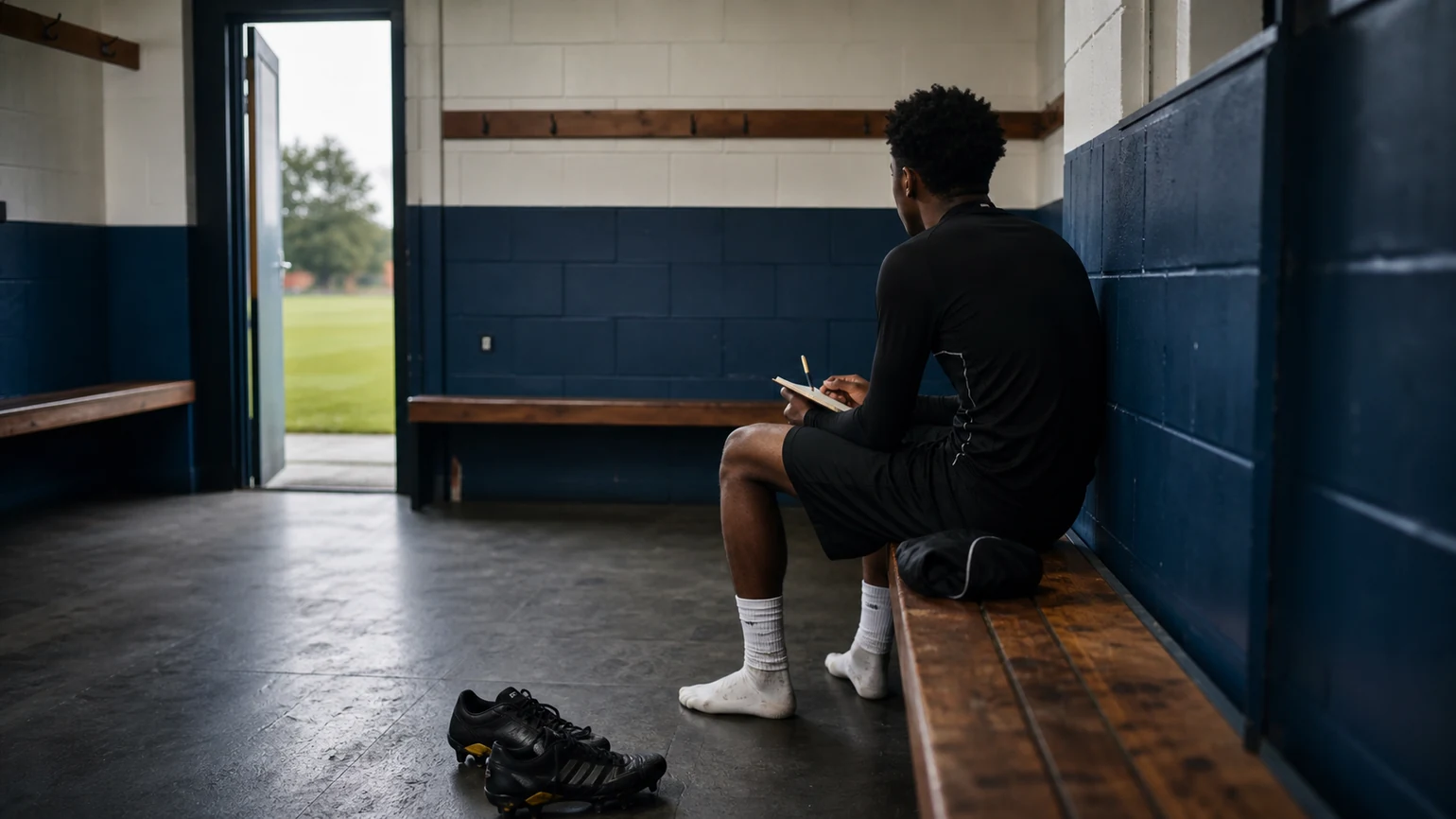
SUGGESTION – anonymised notebook review beside boots after a session, with observed actions grouped into repeated, disappeared under pressure, and next target; no club or player names.
Finish the review now, while the evidence is still clear ↓
4Try it today
Can I turn the trial into one useful week?
- Write three repeatable behaviours that showed up.
- Write two moments where pressure changed the decision or execution.
- Write one respectful feedback question for the official channel.
- Choose one seven-day action and one number you will track in training or the next game.
Self-check: Is every note an observation, official feedback, or a clearly labelled assumption? Does the seven-day action sit inside the player's control? If yes, the trial has already produced useful direction.
A trial answer matters, but the player's next week matters too. Review the evidence calmly, ask one useful question, and turn the experience into one action that can be trained.
The road continues
Next: Academy, Local, or Overseas?
Use the trial evidence to compare the next environment by fit, facts, and family sustainability.
Continue