SPECIALIST TRANSFORMATION · BALL MASTERY · AGES 10-16+
Can your first touch survive the player arriving?
Read the pressure early, shape before the pass, and use a touch that keeps the next action available.
On this phase
- Read how close the pressure is before the ball arrives.
- Match the size and direction of the touch to the space.
- Recover quickly when the first touch is not clean.
- Score a 12-rep pressure-touch test today.
At the end: a 12-rep scorecard that measures whether your touch creates the next action.
1Read the pressure
What should I know before the ball reaches me?
Start with distance, not a favourite skill. A defender one step away gives you a different problem from a defender several steps away. Look before the pass, then decide whether the ball needs to stay close or travel into space.
Use one simple call before the ball arrives: close when pressure can reach you now, or room when you can move forward. The call forces the picture into your decision.
Seeing the pressure helps, but the body still has to be ready before contact ↓
2Shape early
How do I prepare without becoming stiff?
Move while the ball travels. Stay low enough to adjust, keep the feet active, and show a body angle that lets you protect the ball or play forward. Ready does not mean tense.
- Check the pressure before the pass.
- Adjust the feet while the ball travels.
- Let the hips face the safest useful space.
- Keep enough balance to change the decision late.
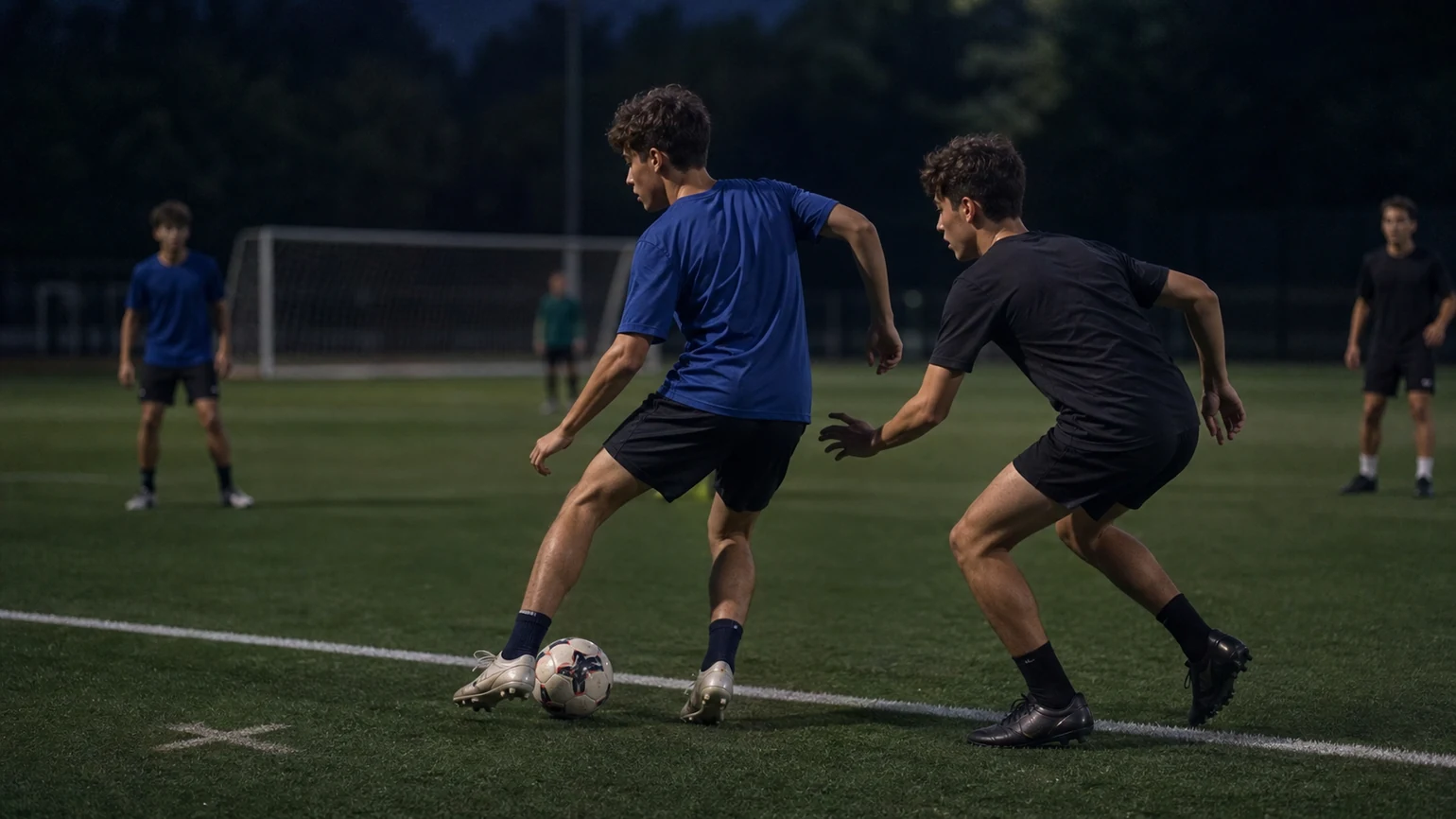
SUGGESTION – anonymised split-screen of the same receiving action with close pressure and with room; freeze just before contact to show the different body shape.
Good preparation still needs the right amount of touch ↓
3Choose the touch
How big should the first touch be?
The touch should move you towards the next action. With close pressure, absorb more of the ball's energy and keep it reachable. With room, guide it far enough to carry, pass, cut, or accelerate without adding a rescue touch.
Ask after contact: Did I move the ball, or did the ball move me? If you have to reach, turn back, or take an emergency step, the touch did not set the next action.
A poor touch is not the end of the rep. Get low, reconnect the feet, take the closest useful correction, and decide again. The newer sessions repeatedly showed that a calm second touch can recover a wide first one.
Now test whether the touch still works when the picture changes ↓
4Try it today
Can I create the next action 12 times?
- Set a left gate, right gate, and short return gate. Use a partner, wall, or feeder for 12 passes.
- Before every pass arrives, call close or room. If training alone, alternate the call every rep.
- Take the first touch towards one gate, then complete a pass or controlled carry as the next action.
- Score one point only when you stay balanced, keep the ball reachable, and complete the next action without a rescue touch.
Self-check: What was your score out of 12? On the missed reps, name one cause only: late look, stiff body, wrong touch size, or slow recovery. Repeat four reps with that one cause in mind.
A strong first touch is not one perfect shape. It is an early read, a prepared body, and a touch that leaves you with a useful next action.
The road continues
Next: Adjustment Steps & Body Control
Build the footwork that keeps you connected to the ball when the touch or speed changes.
Continue