Fitness phase · build an honest football week
Does your week build you—or just fill every day?
A useful week fits games, team work, individual practice, recovery, school, and review without pretending every day should carry the same load.
On this phase
- Why fixed commitments go on the page before extra work.
- How to place individual work instead of piling it onto busy days.
- Where wind-down, recovery, and a missed-day repair belong.
- A seven-day map you can check in ten minutes.
Stay to the end: the ten-minute seven-day map.
1The real week
What is already taking something out of you?
Start with games, team sessions, school demands, travel, and other fixed commitments. Extra work only makes sense after the real load is visible.
Once the fixed load is visible, every extra action needs a clear job. ↓
2Place the work
Where does individual training actually fit?
Put the most demanding individual work where it does not damage the next important football action. Short work can attach to an existing practice; larger work needs enough space around games and team sessions.
Do not fill blank days automatically. Give each addition a job, a duration, and a reason it belongs on that day.
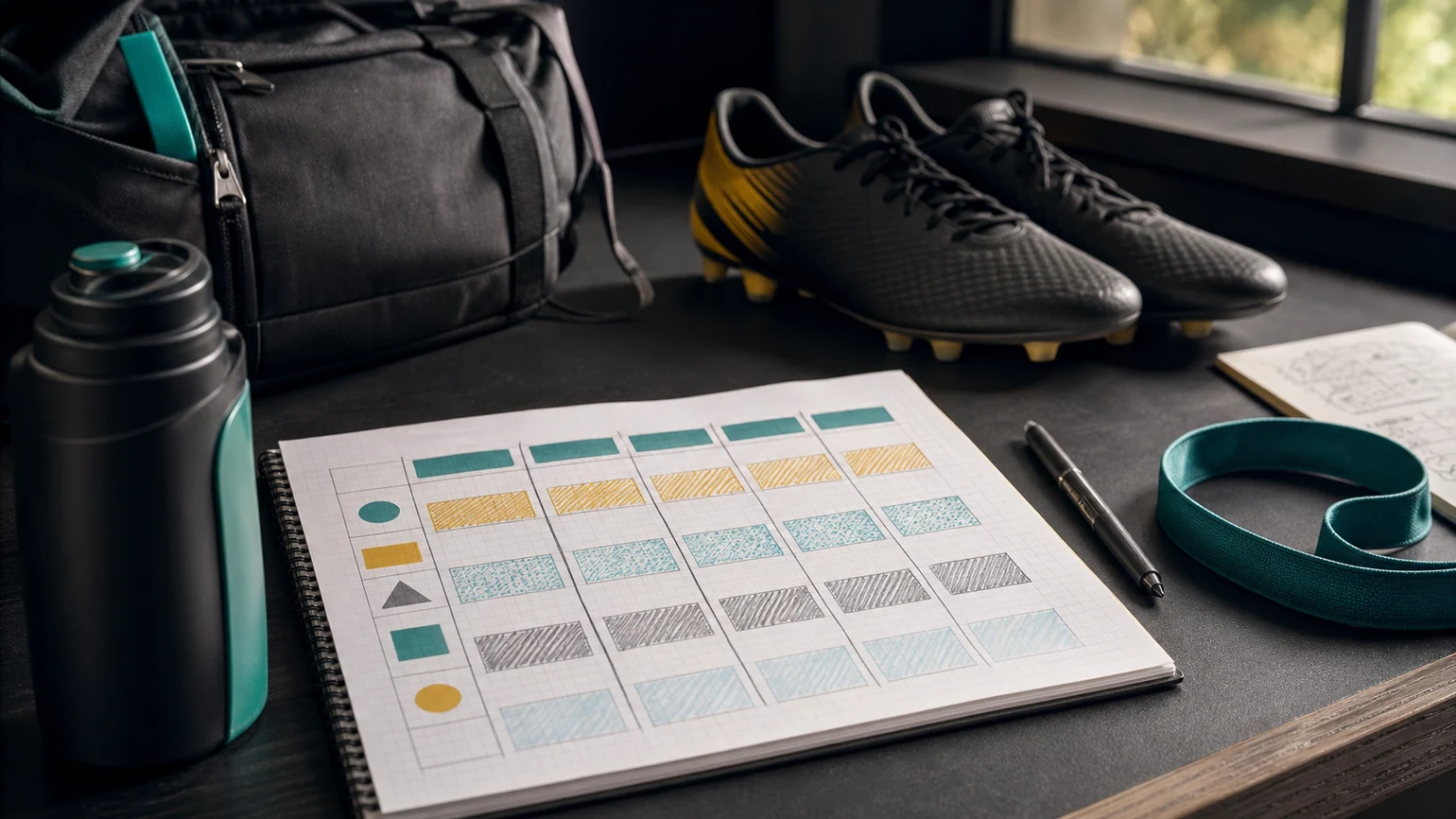
SUGGESTION — anonymised overhead shot of a player and Coach Joe marking a seven-day paper grid with games, team work, individual work, school, and recovery; no names visible.
A week is not professional if it has no plan for winding down or adjusting. ↓
3Recover and repair
What happens when the day does not go to plan?
Schedule the transition after late work: food, a short downshift, less stimulation, and a repeatable sleep rhythm that suits the family. Recovery is part of the week, not proof that the player lacked discipline.
Missed one action? Do not abandon the week or double the next day. Mark what happened, protect the next important session, and resume with the next sensible action.
The plan becomes honest when the player can count the load and explain every addition. ↓
4Try it today
Can you explain every day in ten minutes?
- Draw seven boxes and place every game, team session, school demand, and travel commitment first.
- Add only individual work already agreed with the relevant coach or parent; write its job and expected duration.
- Mark recovery actions and at least one genuine low-load or off period instead of treating every blank as training space.
- Count the demanding days. If hard work is stacked or the next key session is exposed, adjust the map before doing more.
- At week's end, record completed, changed, and skipped actions without punishment; use that evidence for the next map.
Professional habits are not a full calendar. They are repeatable decisions that let the player train, recover, study, and return ready for the next important action.
The road continues
Back to Fitness
Return to the road and choose the next phase when you are ready.
Continue