1v1 Defending phase · recovery and the next danger
You got beaten. Is the danger over?
The first contest can be lost without abandoning the situation. Recover the line, protect the middle, and make the attacker solve you again.
On this phase
- Why charging at the ball can turn one lost duel into a clear route to goal.
- The first recovery job: protect the next danger.
- How speed and surrounding space change the recovery feet.
- A nine-rep second-effort scoreboard.
Stay to the end: the nine-rep second-effort scoreboard.
1The second situation
What is the mistake after getting beaten?
Treating the duel as finished—or trying to erase it with one desperate charge. The next job is to reduce the new danger, not to win back pride in the same second.
Protecting the next danger starts with recovering the line before chasing the ball. ↓
2The recovery line
Where do you run when the attacker gets the edge?
Recover toward the route that protects the most dangerous next action. Getting goal-side or blocking the middle can matter more than reaching the ball first.
Recover the line. Slow the next action. Tackle only when the picture gives a clear moment.
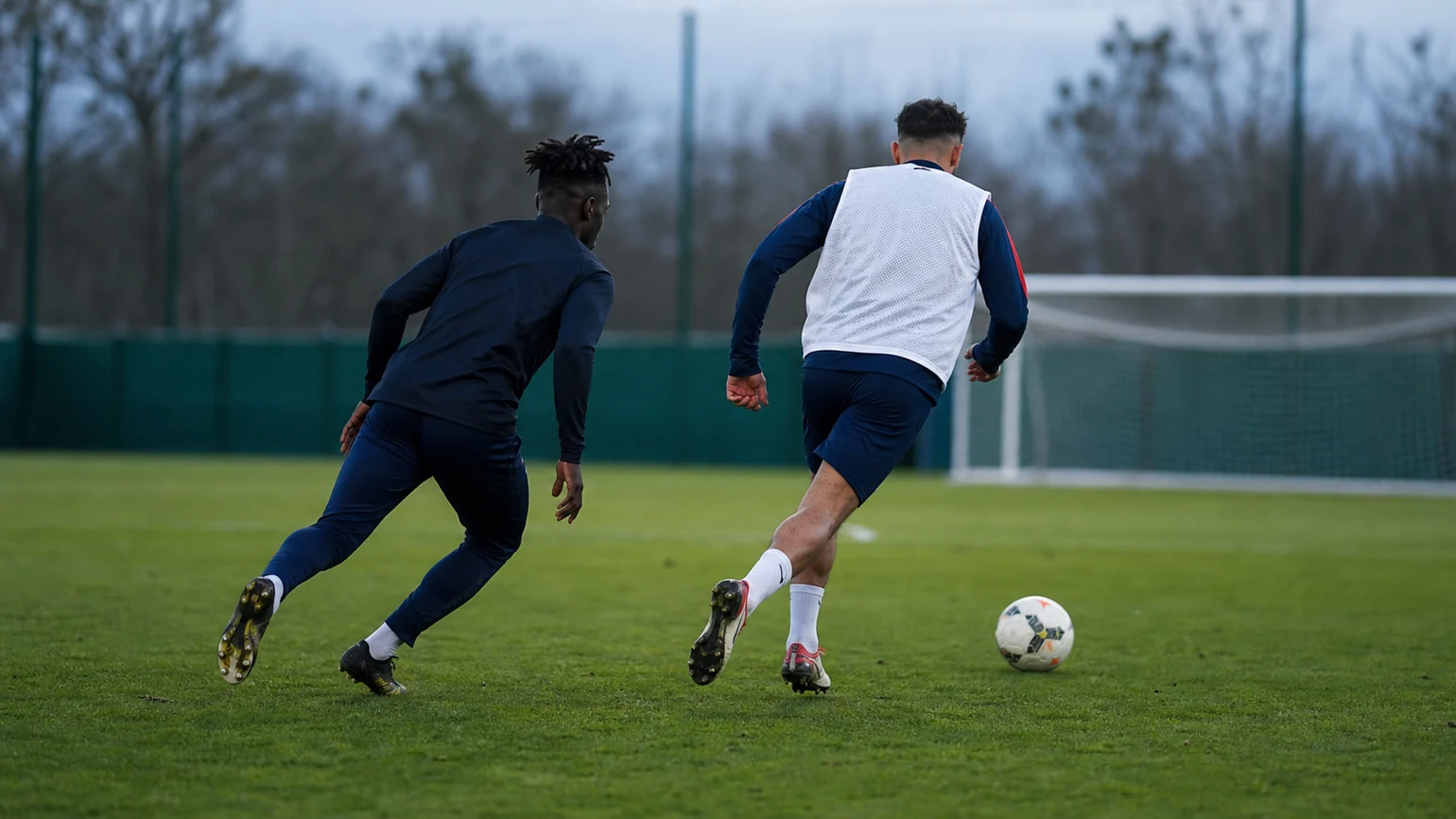
SUGGESTION — anonymised live duel where the attacker gains half a step; keep the clip running through the defender's recovery line and second action.
The line is only useful if the feet can adjust to the attacker's new speed and space. ↓
3Reset the feet
How do you avoid over-committing twice?
Turn out of backward running, regain a sprint-ready angle, and re-check the space around the attacker. The paired session showed that foot position must change with both speed and available space.
Do not chase the old touch. Set the body for the next push.
Second effort is measurable when the rep begins with the attacker already ahead. ↓
4Try it today
Can you protect the situation after losing the first step?
- Start nine reps with the attacker half a step ahead: three wide, three central, and three with open space.
- The defender scores first for recovering the dangerous line, not for winning the ball.
- Add one point for slowing, guiding, or forcing a backward action within five seconds.
- Review every charge or crossed-foot recovery; repeat that picture at lower pace.
Being beaten is one event. The defender's response decides whether it becomes the end of the situation.
The road continues
Back to 1v1 Defending
Return to the road and choose the next phase when you are ready.
Continue