1v1 Defending phase · speed, gap, and angle
Are you defending the player—or the speed?
High, medium, and low pace ask for different gaps, foot angles, and body-weight choices before the tackle is even considered.
On this phase
- The first read: speed, danger, and surrounding space.
- Why high pace needs a body ready to sprint.
- How medium and low pace let the defender close and guide.
- A nine-rep speed-call test.
Stay to the end: the nine-rep speed-call test.
1The first read
What changes before the attacker takes a touch?
Read how fast the attacker is arriving, how much space sits around the duel, and whether the next action can create immediate danger. The same stance cannot solve every picture.
At high pace, the defender has to be ready for the sprint before closing the gap. ↓
2High pace
How do you slow someone who is already moving fast?
Use an angle that guides the attacker without opening a straight sprint lane. The toes and body weight stay closer to the likely running direction so the defender can turn and match the push.
Close the angle, not the escape. Arrive ready to sprint in the direction you are showing.
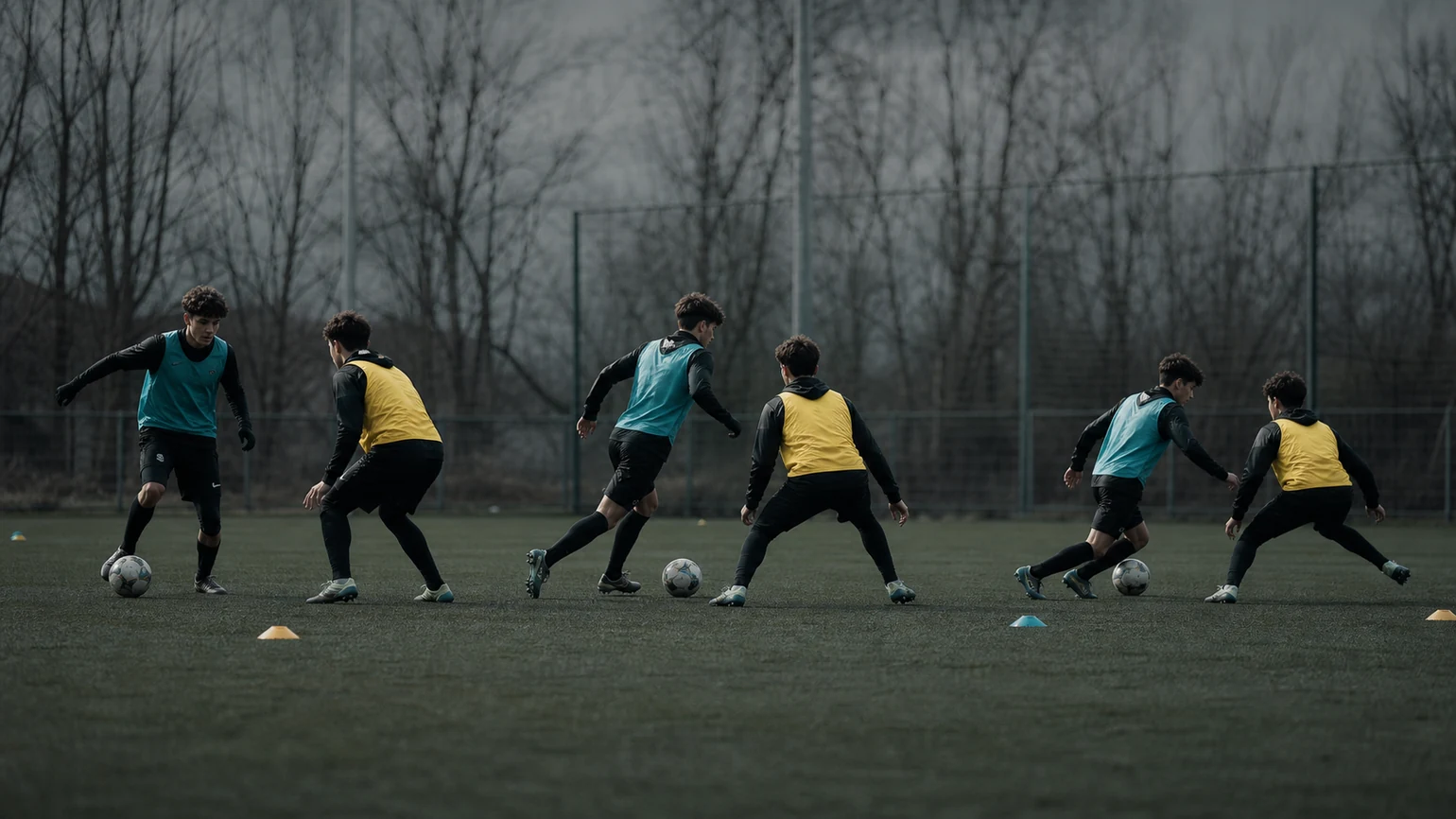
SUGGESTION — anonymised three-rep comparison with high, medium, and low approaches; overlay the changing gap and foot angle before each duel.
When the pace drops, giving the same gap gives the attacker time to choose again. ↓
3Medium and low pace
When can you step closer and apply more pressure?
As the attacker slows, the defender can close more, turn one foot further toward the ball, and guide with greater pressure. The order stays clear: slow the attacker, guide the direction, then close enough to force a mistake, backward action, or safe ball win.
Speed decides the gap. Space decides the angle. The tackle comes after both reads.
The read only becomes useful when the defender has to call it before moving. ↓
4Try it today
Can you change the setup when the speed changes?
- Defend nine live reps: three high pace, three medium pace, and three low pace.
- Call the speed before closing and choose the gap before the attacker reaches you.
- Score one point for slowing the attacker and one for guiding away from the main danger.
- Review any rep where the feet pointed at the player but not toward the likely sprint.
Good defenders do not carry one stance into every duel. They read the speed, set the gap, and make the attacker play into the prepared direction.
The road continues
Back to 1v1 Defending
Return to the road and choose the next phase when you are ready.
Continue