SPECIALIST TRANSFORMATION · PASSING & DISTRIBUTION · AGES 11-16+
The pass higher-level coaches check first. Most players can't hit it.
The driven laces pass over medium distance — a standard requirement, on both feet, from imperfect positions.
On this phase
- What a shot pass is and why scouts treat it as a requirement.
- The body: tense the middle, stay bent, head over the ball.
- Small, medium, wide — the three-distance ladder.
- The stop rule that keeps bad reps from training you wrong.
Stay to the end: the three-distance session and the rule that protects your reps.
1The requirement
What is a shot pass — and why does it decide trials?
A shot pass is a driven pass with the laces — flat, fast, and straight to a teammate over the distance the inside of the foot can't cover.
You can get away with the inside foot for a long time. Then you can't. From a real session: if a coach at a higher level sees you can't hit this, it's game over — it is a standard requirement they all look for. Both feet. The weaker foot can lose some distance, but not the medium range.
DO NOT GENERATE (VIDEO PLACEHOLDER) — SUGGESTION — anonymised side-by-side: same distance, one inside-foot pass dying on the way, one laces shot pass arriving flat and fast. Let the ball flight carry it; freeze on the locked ankle at contact.
The pass is won before the swing — in the middle of your body. ↓ ↓
2The body
Where does the power actually come from?
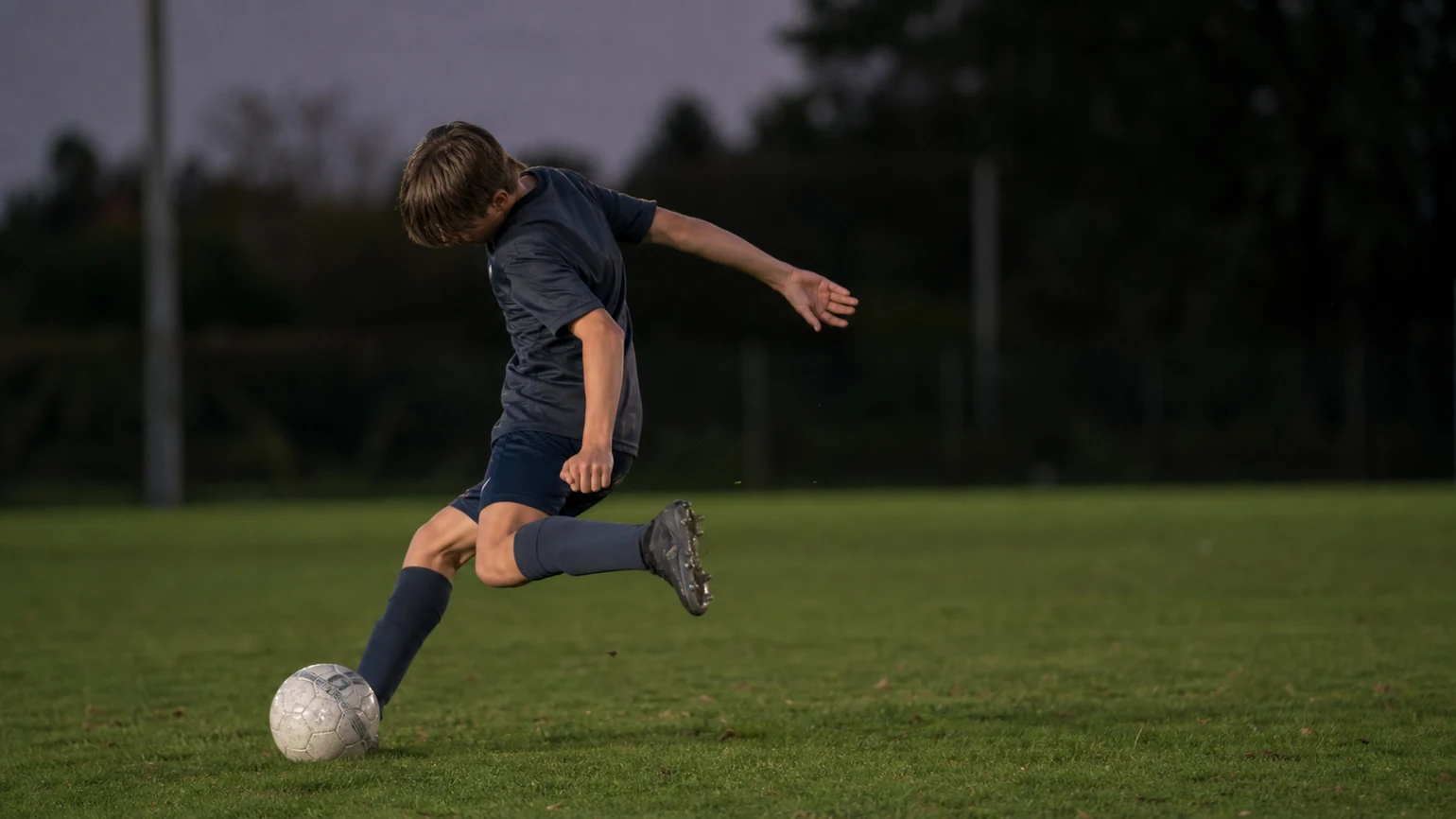
Tense your abs. Stay bent. Keep your head leaning toward the ball. Let the hip come over the top. Loose in the middle means wide, sliced, or weak — no matter how hard the leg swings.
Coach cues from the session, in order: control your abs · keep bent, don't go upright · toe pointed down · shift on your toes · we only extend the body on maximum distance.
Watch the flight, not the effort. Straightness and intensity tell you if the technique held. It is not about how hard it looks.
Then the distance changes — and the body has to adjust with it. ↓ ↓
3Three distances
Why train small, medium, and wide separately?
Each distance is its own pass. Short: full control, compact body. Medium: the trial-standard strike. Wide: open the hip more, push the contact further to the side, and only now let the body extend.
Position beats perfect service. By the end of the session the player was striking cleanly from positions that weren't ideal — because the body shape had become the constant. That is the target: the shape survives the situation.
Same thought at every distance: don't think about the distance. Do the same thing — position, tension, contact.
Now the session — with the one rule that protects it. ↓ ↓
4Try it today
Can you hit ten clean at each distance?
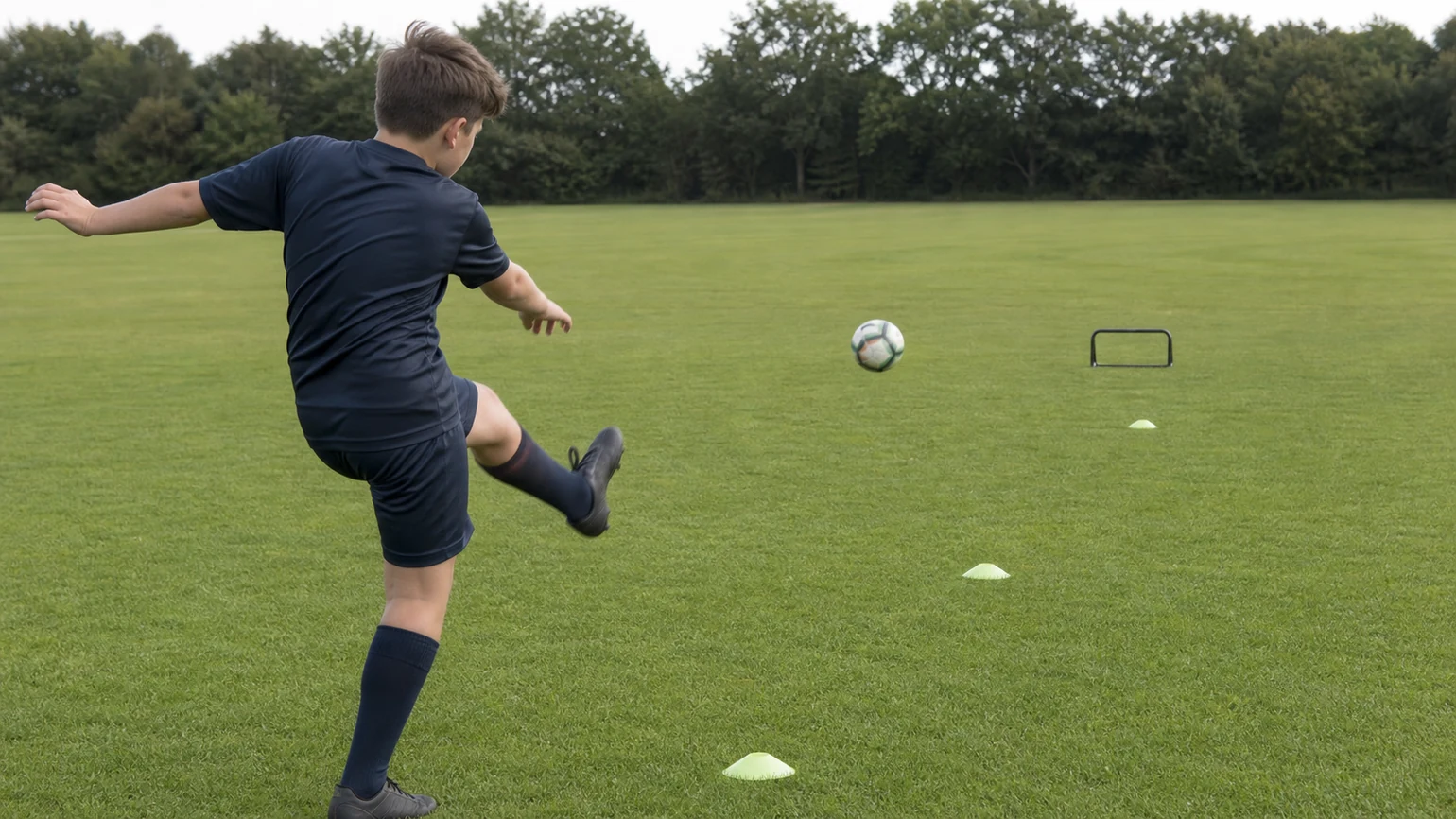
- Set three markers: short (5-10m), medium (15-20m), wide (25m+). A wall, a partner, or a target gate all work.
- Ten shot passes right foot, ten left, at short and medium. At wide, right foot first; let the weaker foot lose distance but not shape.
- Score only straightness and flight intensity — never how hard it felt. A flat, fast, straight ball is one point.
- STOP RULE from the session: if fewer than half of any ten are good, pause. Reset the body cues and start the set again — keep going through bad reps and your brain trains the wrong pass.
The shot pass is a requirement, not a trick — a stable, bent body and a locked contact, repeated on both feet until the shape survives any position.
The road continues
Back to Passing & Distribution
Return to the road: switch play, the pass-ready body, and the simple ball that earns trust.
Continue